St Helier estate bulky rubbish collection options
Posted on 15/07/2026
St Helier estate bulky rubbish collection options: a practical local guide
If you live on St Helier estate, bulky waste can become a problem faster than most people expect. One day it is a broken wardrobe leaning awkwardly in the hallway, the next it is an old mattress, a cracked chest of drawers, or a stack of boxes that has quietly taken over the spare room. The good news is that there are several sensible St Helier estate bulky rubbish collection options, and the right one depends on how much you have, how quickly it needs clearing, and how hands-on you want to be.
This guide walks you through the practical choices, the trade-offs, and the details that tend to matter in real life. No fluff. Just a clear look at how bulky rubbish collection works, what to watch out for, and how to choose an option that suits a flat, maisonette, or family home on the estate. If you are also dealing with mixed waste, not just a single item, it is worth understanding the broader rubbish clearance and waste removal services that can handle more than one type of load in one go.
To be fair, bulky rubbish is one of those jobs that looks simple until you start moving it. Then you notice the narrow stairs, the awkward corners, the parking, the lift that barely fits a large sofa, and suddenly the whole thing feels much less straightforward. That is exactly why it helps to compare options before you book anything.
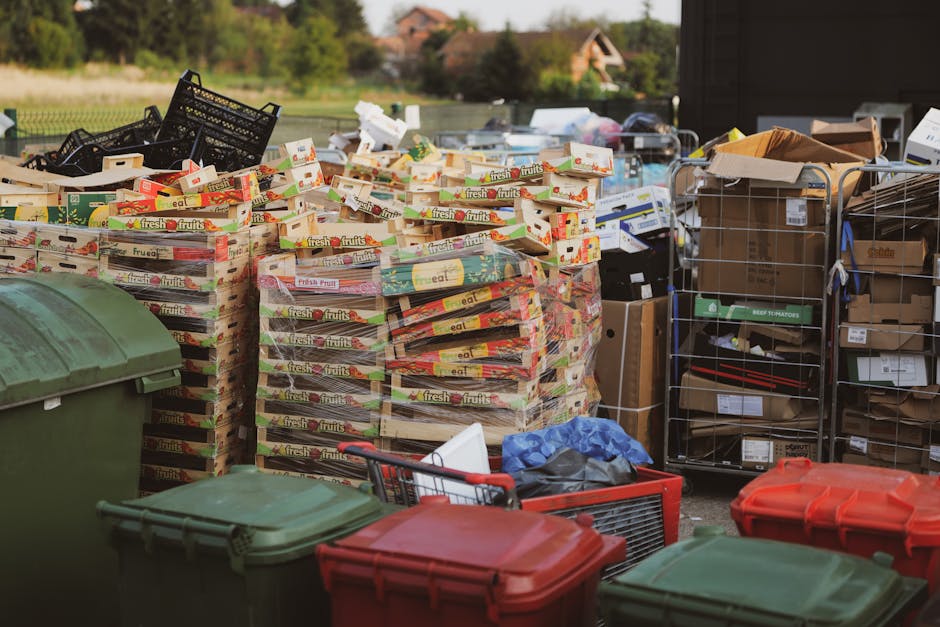
Why St Helier estate bulky rubbish collection options matters
Bulky rubbish is not just an eyesore. On an estate like St Helier, it can affect shared entrances, walkways, bin areas, parking spaces, and how pleasant the place feels day to day. A sofa left outside for too long can become a nuisance. A pile of broken furniture can make a stairwell harder to use. And if you are preparing a property for sale or letting, clutter can make a home feel smaller and less cared for than it really is.
There is also a practical side. Bulky items are heavy, awkward, and often not something you want to drag through communal spaces on your own. You may need help with lifting, loading, transport, or sorting items for recycling. That is where choosing the right collection option matters. A quick, reliable solution can save time, reduce stress, and prevent accidental damage to walls, flooring, or communal areas.
In our experience, the people who get the best results are the ones who decide early what kind of clear-out they actually need. One mattress? Different job. Three rooms of mixed household items? Different again. A renovation with old timber, packaging, and broken fittings? That is a proper waste load, not just a one-off pickup.
Practical takeaway: the best bulky rubbish option is rarely the cheapest on paper. It is the one that fits your item type, access, and timing without creating extra hassle.
If you are dealing with a full property clear-out rather than a single item, it may help to look at house clearance as well, because that can be more efficient than arranging multiple small collections. And if you are clearing workspaces or shared offices, office clearance may be the better fit.
How St Helier estate bulky rubbish collection options works
Most bulky rubbish collection options follow the same broad pattern: you identify what needs removing, choose a collection method, agree on access and timing, and then the waste is lifted, loaded, and taken away for disposal or recycling. The details vary, though, and that is where the differences matter.
Typical collection flow
- Assess the waste - list the items, estimate volume, and note anything unusually heavy or awkward.
- Choose the collection route - one-off removal, grouped collection, estate-related pickup, or a larger waste clearance service.
- Check access - stairs, lifts, parking, loading distance, and whether items need to be brought down from a flat.
- Agree the timing - same-day, next-day, or booked ahead depending on urgency.
- Prepare the items - separate reusables, remove personal belongings, and make sure access paths are clear.
- Collection and disposal - items are removed, sorted where possible, and handled in line with recycling and waste best practice.
For many residents, the biggest decision is not the actual collection day. It is whether they want a simple item pickup or a more flexible service that can handle mixed waste and awkward access. If you are not sure yet, start by reviewing the broader services overview so you can match the job to the service rather than forcing the wrong fit.
One useful rule of thumb: if you can carry the item out yourself without damaging walls, and it is only one or two pieces, a smaller collection may be enough. If you are thinking, "well, maybe we can move it, but it's going to be a faff," that is often the point where a professional collection starts to make sense.
Key benefits and practical advantages
The main advantage of using a proper bulky rubbish collection service is simple: it makes an awkward job manageable. But the benefits go beyond convenience.
- Less strain and risk - you avoid lifting heavy furniture, which is especially helpful in blocks with stairs or tight landings.
- Faster clearance - one visit can remove items that might otherwise sit around for weeks.
- Cleaner shared spaces - no waiting for items to accumulate near entrances or bin stores.
- Better recycling outcomes - mixed bulky waste can often be separated more intelligently than a casual DIY dump run.
- More predictable results - you know who is taking the waste, when, and what happens next.
- Useful for deadlines - ideal if you are moving out, preparing a sale, or resetting a room for new use.
There is also a psychological benefit people often underestimate. Once bulky items are gone, the space feels bigger, calmer, and somehow easier to breathe in. You notice it especially in smaller flats. The room just works again. A sofa that has been blocking the window for months? Gone. Light comes back in. Simple, but lovely.
If sustainability matters to you, it is worth asking how items will be handled. The page on recycling and sustainability is a useful reference point for understanding the mindset behind responsible disposal, especially when items include wood, metal, textiles, or electrical parts.
Who this is for and when it makes sense
Bulky rubbish collection is not only for dramatic clear-outs. It is useful in plenty of everyday situations.
Common St Helier estate scenarios
- Moving home - the old bed frame, wardrobe, or broken desk needs to go before keys are handed over.
- Spring clean or reset - the spare room has become a storage room, and now you want it back.
- End of tenancy - you want the property cleared cleanly and without last-minute stress.
- Renovation or repairs - old fixtures, damaged furniture, and packaging start building up.
- Family clearance - sorting belongings after a relative has moved or downsized.
- Landlord or managing agent needs - items left behind in communal or rented spaces.
- Garden or shed clear-out - broken outdoor furniture, plant pots, and other large bits that do not fit in standard bins.
For garden-heavy clearances, garden waste removal may be better suited than a general bulky item pickup, especially if the waste is mostly green material rather than furniture.
It also makes sense when access is limited. On an estate, that is common enough. You might have a second-floor flat with no lift, or parking that is a bit of a squeeze, or a shared entrance where you would rather not leave a heavy item waiting around. That is normal. It just means planning matters more.
Step-by-step guidance
If you want the smoothest possible experience, do the job in a few simple stages. Nothing fancy. Just a proper sequence.
- List everything that needs to go
Write down the items room by room. Include approximate sizes if you can. A single chair is one thing; a three-seater sofa with a matching armchair is another. If the waste includes mixed materials, note that too. - Separate reusable or saleable items
Before collection, decide whether anything can be donated, sold, or reused. Once it is mixed with waste, that choice usually disappears. A quick scan now saves regret later. - Measure access realistically
Check door widths, stair turns, lift size, and where a vehicle can stop. This sounds obvious, but it is the bit people forget most often. Then everybody stands in the hall wondering how the old wardrobe is supposed to leave the building. - Choose the right service type
For single or small loads, a basic pickup may be enough. For larger or mixed clearances, a more comprehensive service is often better value. If the load includes construction leftovers, consider builders waste disposal instead of treating it like household bulky rubbish. - Confirm timing and access details
Be clear about when the collection is needed, any parking restrictions, and whether someone needs to be present. A few minutes of clarity at the start can save a lot of back-and-forth later. - Prepare the space
Move smaller items out of the way. Clear hallways. Protect floors if needed. It is a little thing, but it helps the collection move faster and feels less chaotic. - Ask how the waste will be handled
Responsible collection means more than just taking things away. You want to know what gets reused, recycled, or disposed of appropriately. That is the difference between clearing clutter and simply passing the problem along.
One more practical point: if you are trying to coordinate the clear-out around transport, work, or school runs, plan for a window of time rather than a single exact minute. Life gets in the way, as it tends to do.
Expert tips for better results
These are the small things that make a bulky rubbish collection go smoothly. They are not glamorous, but they matter.
- Take photos before you book - not for social media, obviously, but so you can judge volume and access properly.
- Keep the route clear - front doors, stairwells, lifts, and shared hallways should be as free as possible.
- Stack items sensibly - if safe to do so, place them where they are easy to lift out without blocking neighbours.
- Don't mix keep and remove piles - this causes confusion. It happens. Then a useful lamp nearly ends up on the wrong side of the van.
- Flag awkward items early - old wardrobes, broken sofas, heavy gym equipment, or water-damaged furniture can need extra care.
- Use one collection for one job - if you have household clutter and a few renovation leftovers, group them into a single coordinated clearance where possible.
Another good habit is checking the broader area context if your property is near shared routes or busy roads. For instance, residents looking at rubbish clearance near Colliers Wood station often face different timing and access constraints than people on quieter side streets. The same thinking applies around St Helier estate: access shapes the job.
And yes, it is fine to ask questions before booking. In fact, it is wise. Any provider worth using should be able to explain what they can take, how they load it, and what happens after collection. If the answers are vague, that is a small warning bell.

Common mistakes to avoid
A bulky rubbish collection can go wrong in fairly predictable ways. The good news is that they are easy to avoid once you know them.
- Underestimating the volume - what looks like "a couple of items" often turns into half a room once you start moving things.
- Leaving the job too late - if you need the space cleared for a move or inspection, don't leave it to the last day.
- Ignoring access issues - stairs, parking restrictions, and distance from the vehicle all affect the job.
- Forgetting about mixed waste - furniture, electricals, and bagged clutter may not belong in the same category.
- Not checking disposal expectations - you want responsible handling, not a guess-and-hope approach.
- Leaving personal items inside furniture - drawers, cupboards, and cushions have a habit of hiding small things you really want back.
One common mistake is assuming every collection option suits every job. It does not. A single bulky item pickup is not the same as a property clearance, and neither is the same as a builders waste job. The fastest route is usually the one that matches the waste properly from the start.
Tools, resources and recommendations
You do not need a van-load of equipment to organise a good collection, but a few simple tools help.
- Measuring tape - useful for checking doorways, lift access, and item dimensions.
- Phone camera - quick photos are often the easiest way to assess a load.
- Marker tape or sticky notes - helpful if you are separating keep, donate, and remove items.
- Gloves - especially for rough timber, splintered edges, or dusty loft items.
- Clear bags or boxes - useful for loose parts, screws, remotes, or cords that need sorting first.
For pricing clarity, a straightforward page like pricing and quotes can help you understand how collection costs are usually approached, without guessing. That is particularly helpful if you are comparing a small bulky pickup with a larger clearance.
If you want a wider view of how services fit together, the main services overview can help you decide whether to combine bulky waste with other removal needs. That is often the more efficient choice, honestly.
Law, compliance, standards, or best practice
Bulky rubbish collection should always be handled with care. In the UK, waste must be managed responsibly, and reputable providers should be able to explain how they deal with collection, transport, and disposal in line with accepted practice. You do not need a legal lecture, but you do need reassurance that waste is not being dumped carelessly.
For householders, the safest approach is to avoid leaving bulky waste on shared land for long periods and to make sure items are handed over to a legitimate collector. If you are using a service, it is sensible to ask what kinds of items they accept, whether they separate recyclable material, and how they manage anything that needs special handling.
Best practice also includes access safety. Lift heavy items properly, keep routes clear, and do not block fire exits or communal areas. In a block or estate setting, that part really matters. It is not just about convenience; it is about neighbours and shared responsibility.
If safety is a concern, especially with heavy lifting, damaged furniture, or awkward objects, the insurance and safety information is worth reading before you book anything. It is a simple way to sanity-check expectations and reduce avoidable risk.
Options, methods, or comparison table
Here is a straightforward comparison of the main bulky rubbish collection options people usually consider on St Helier estate.
| Option | Best for | Strengths | Limitations |
|---|---|---|---|
| Single-item pickup | One large item such as a mattress, sofa, or wardrobe | Simple, quick, minimal planning | Less suitable if you have multiple items or mixed waste |
| Grouped bulky collection | A few items from one room or one household clear-out | Good balance of speed and value | Needs better item planning and access preparation |
| Full household clearance | Multiple rooms, moving out, or downsizing | Most efficient for larger jobs | Usually more involved than a basic pickup |
| Builders waste collection | Renovation debris, timber, fixtures, packaging | Better suited to construction-related rubbish | Not ideal if the load is mainly household furniture |
| Specialist item removal | Very heavy, bulky, or awkward objects | Safer handling for difficult items | May need more detailed access checks |
The right answer depends on your specific mix of waste. That is the bit people sometimes skip. They choose the cheapest-looking route, then spend half the afternoon trying to make it work. Usually not worth it.
Case study or real-world example
Imagine a couple living in a second-floor flat on St Helier estate. They have a broken sofa, a tired mattress, a small wardrobe, and several bags of mixed household clutter from a spare room they have finally decided to tackle. Nothing extreme. But enough that the hallway starts to feel crowded.
At first, they think about moving the items themselves. Then they look at the stairs, the narrow turn on the landing, and the fact that they would need a vehicle large enough to handle everything in one trip. Suddenly the job looks less like a quick weekend errand and more like a half-day challenge.
They choose a grouped bulky collection instead of trying to manage each item separately. Before the appointment, they measure access, clear the hallway, and separate a few items they want to keep. The collection is quicker than expected because the items are already grouped and the route is clear. No drama, no damage, no repeated trips.
The part that sticks with them is not the removal itself. It is the relief afterwards. The spare room can finally be used as a room again. That empty, echoing feeling when clutter leaves? Very satisfying. A little quieter too.
If the job had included shelving, packing materials, and renovation offcuts, they might have been better served by a broader waste removal solution. Matching the method to the job is what keeps the whole process neat.
Practical checklist
Use this before booking any bulky rubbish collection on St Helier estate.
- Identify every item that needs removing.
- Check whether anything can be reused, donated, or sold.
- Measure the largest items and note access restrictions.
- Confirm whether the waste is household, garden, or builders-related.
- Clear hallways, entrances, and the collection route.
- Remove personal belongings from drawers, cupboards, and cushions.
- Decide whether you need a single-item pickup or a wider clearance.
- Ask how recycling and disposal will be handled.
- Check timing, parking, and any building rules that may apply.
- Keep a note of the items you expect to leave so nothing is missed.
That little checklist saves a lot of awkwardness. Especially when someone remembers, at the last minute, that the old side table was actually meant to stay. Happens more than you'd think.
If you want a broader sense of how collections are organised and what other services may fit alongside bulky waste, it is worth looking at the main about us page too, simply to understand the approach and what kind of work is typically handled.
Get a free quote today and see how much you can save.
Conclusion
Choosing between the different St Helier estate bulky rubbish collection options comes down to three things: the amount of waste, the access at your property, and how quickly you need the space back. Once you match those properly, the whole process becomes much easier.
For one or two awkward items, a simple collection may be enough. For mixed clutter, moving-day leftovers, or a larger clear-out, a more complete waste solution usually makes life simpler and safer. Either way, the best results come from a little planning up front.
Truth be told, bulky rubbish is rarely the most exciting job on the list. But it is one of those jobs that makes a real difference once it is done. The room feels better. The flat feels lighter. And you can get on with the next thing, whatever that may be.
Take it one step at a time, keep the route clear, and choose the option that fits the job rather than fighting the job to fit the option. Small decision, big relief.


From a young age, Blair has cultivated a passion for order, which has now matured into a prosperous profession as a waste removal specialist. She derives satisfaction from transforming disorderly spaces into practical ones, aiding clients in conquering the burden of clutter.
 Tipper Van - Waste Disposal and Rubbish Clearance Prices in Colliers Wood, SW19
 Luton Van - Waste Disposal and Rubbish Clearance Prices in Colliers Wood, SW19